
What Happens in a College Disciplinary Hearing? A Student Survival Guide
What Happens in a College Disciplinary Hearing?
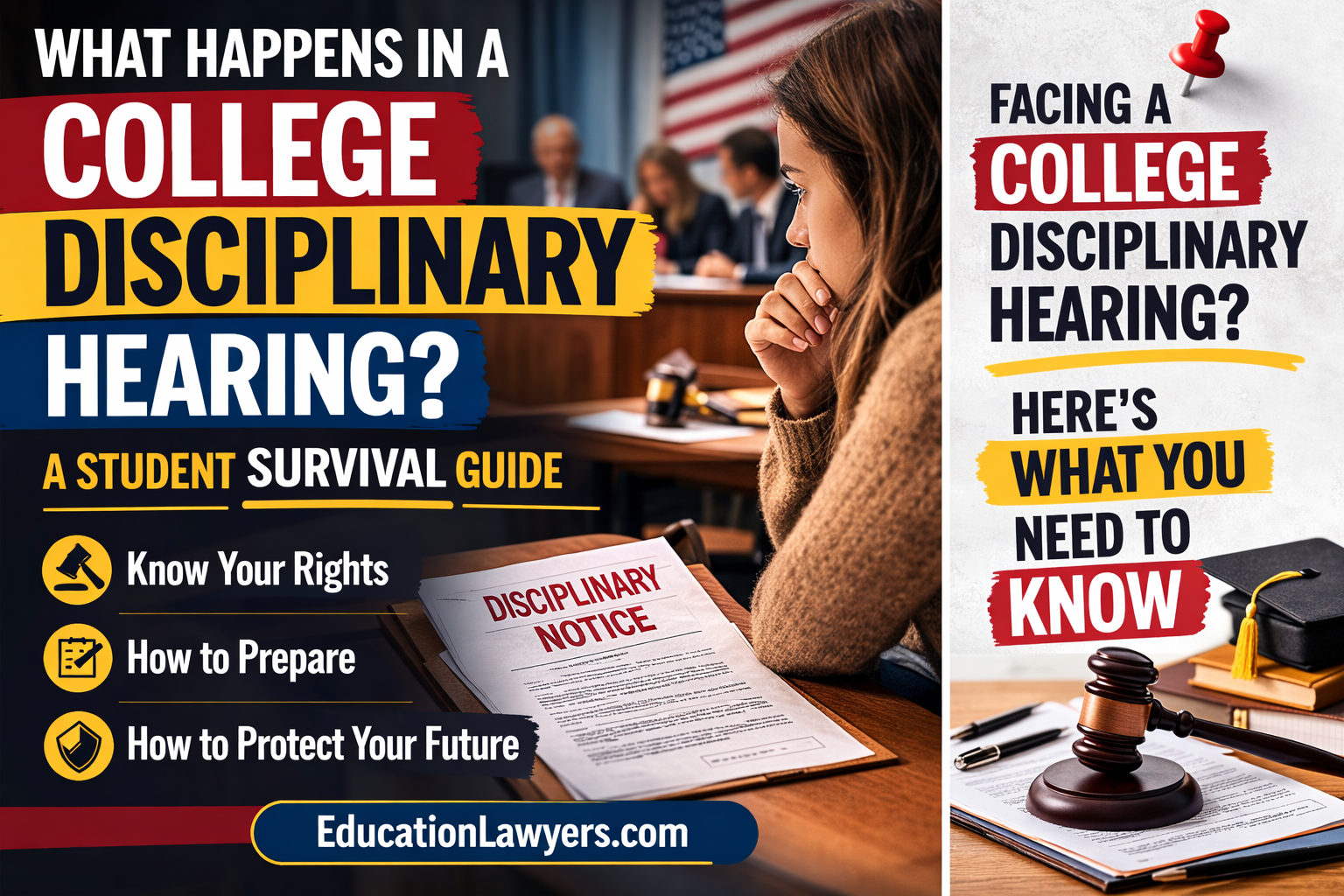
Receiving notice of a college disciplinary hearing can be one of the most stressful moments in a student’s academic career.
Students are often told they must appear before a student conduct board or disciplinary panel to answer allegations that could lead to suspension or even expulsion.
Many students have no idea what to expect.
Understanding the process can make a significant difference in how a case unfolds.
Why Colleges Hold Disciplinary Hearings
Most colleges have a student code of conduct that outlines behavioral expectations for students.
When a school believes a student may have violated those rules, the university may initiate a disciplinary process.
Common allegations include:
• academic misconduct or cheating
• plagiarism
• harassment or bullying
• alcohol or drug violations
• fights or threats
• sexual misconduct allegations under Title IX
If the school determines the allegation is serious enough, the case may move to a formal disciplinary hearing.
Step 1: Notice of Allegations
The process usually begins with a written notice from the school.
This notice typically includes:
• the alleged rule violations
• a description of the incident
• possible sanctions
• the date of the hearing
Students should read this notice carefully because it explains the rules governing the process.
Step 2: Investigation
Before the hearing occurs, the school may conduct an investigation.
This may involve:
• interviewing witnesses
• reviewing text messages or emails
• collecting social media posts
• reviewing academic records or exam materials
In some cases, students are asked to participate in an interview with investigators.
Anything said during this interview can become evidence in the case.
Step 3: The Hearing
The disciplinary hearing itself often resembles a simplified courtroom proceeding.
A panel may include:
• faculty members
• administrators
• students trained in conduct procedures
During the hearing the panel may review evidence and hear testimony.
Students may have the opportunity to:
• present their version of events
• challenge the evidence
• question witnesses
• bring supporting witnesses
Some universities allow lawyers or advisors to attend the hearing, though their role may be limited depending on the school’s policies.
Step 4: The Decision
After the hearing, the panel usually deliberates privately.
They determine whether the student violated the school’s conduct code.
If the student is found responsible, the panel may impose sanctions such as:
• warning or reprimand
• probation
• suspension
• expulsion
The school will typically issue a written decision explaining the outcome.
Step 5: Appeals
Most colleges allow students to appeal disciplinary decisions.
Appeals may be allowed if:
• new evidence emerges
• procedures were not followed
• the sanction imposed is disproportionate
Appeal deadlines are often very short, sometimes only a few days after the decision.
Why These Hearings Matter
A disciplinary finding can have lasting consequences.
Students may face:
• suspension or expulsion
• difficulty transferring schools
• problems applying to graduate programs
• reputational harm
Because of these risks, it is important to take disciplinary hearings seriously.
When Students Should Seek Legal Guidance
Students sometimes assume the process will be informal or forgiving.
However, university disciplinary proceedings can significantly affect a student’s future.
Education lawyers frequently assist students by:
• reviewing the university’s conduct code
• preparing students for hearings
• identifying procedural violations
• helping challenge unfair disciplinary outcomes
Understanding the rules before the hearing can make a meaningful difference in the outcome.
EducationLawyers.com Helps Students Navigate College Discipline Cases
EducationLawyers.com represents students nationwide in matters involving:
• college disciplinary hearings
• Title IX investigations
• academic misconduct allegations
• professional program dismissals
If you or your child is facing a university disciplinary investigation, learning about your rights early can be extremely important.
Visit EducationLawyers.com to learn more about student rights and education law.