
Oklahoma Education Censorship Case Raises First Amendment Concerns for Students
Oklahoma Education Censorship Case Raises Major First Amendment Concerns for Students and Families
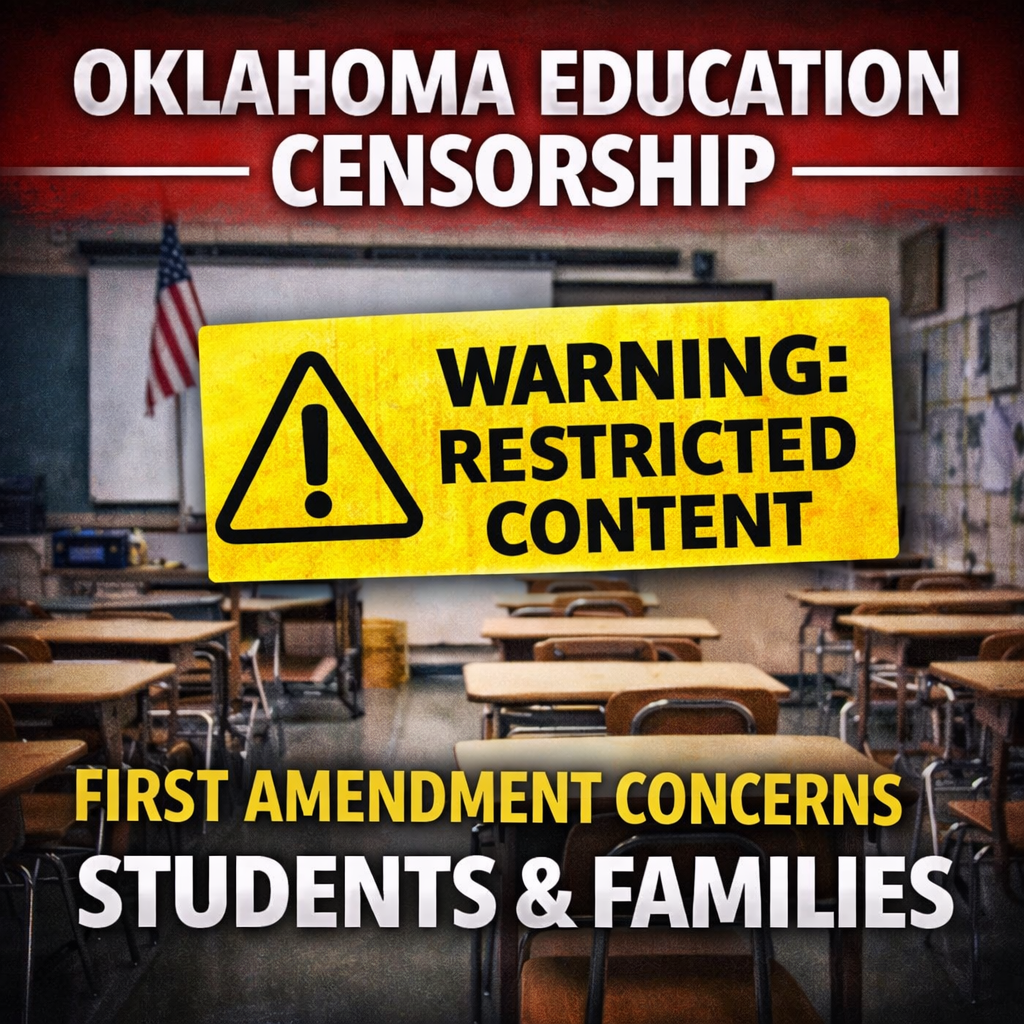
A major legal battle out of Oklahoma is putting student rights, free speech, and the future of classroom education under a national spotlight.
For families searching for an education lawyer, student rights attorney, or school censorship lawyer, this case is not just political.
It directly impacts what students are allowed to learn.
What Is the Oklahoma Education Censorship Case About?
At the center of the case is Oklahoma’s controversial law, HB 1775, which restricts how teachers can discuss topics like race, gender, and systemic inequality in the classroom.
The lawsuit, commonly referred to as Black Emergency Response Team v. Drummond, challenges the law as unconstitutional.
Plaintiffs, including students and teachers, argue that the law:
Limits classroom discussions on important historical and social issues
Creates vague rules that teachers cannot reasonably follow
Chills speech by making educators afraid of discipline
Restricts students’ access to information
Courts have already stepped in at multiple levels.
A partial injunction has blocked parts of the law, and the Oklahoma Supreme Court has ruled that it does not apply to higher education classrooms.
The case is ongoing, with appeals continuing at the federal level.
Why This Case Matters for Students Nationwide
This is not just an Oklahoma issue.
It raises a fundamental legal question:
Do students have a right to receive information in school?
Attorneys challenging the law argue that the First Amendment protects not only the right to speak, but also the right to learn.
Courts have recognized that overly vague laws can create a “chilling effect,” where teachers avoid entire topics out of fear of punishment.
That means students may never be exposed to key parts of history, law, and society.
The Legal Issues at Play
This case involves several core constitutional principles that any experienced education lawyer will recognize:
First Amendment Violations
Restrictions on what teachers can say and what students can learn.
Vagueness and Due Process
Laws that are unclear can be unconstitutional because people cannot determine what is allowed.
Equal Protection Concerns
Limitations that disproportionately impact discussions of race, gender, or identity.
Academic Freedom
A long-recognized principle protecting the ability of educators to teach without political interference.
Courts reviewing this case are being asked to decide how far states can go in controlling classroom content.
What Schools Are Arguing
The state’s position is equally important.
Oklahoma has argued that:
Classroom instruction is “government speech”
The state has authority to control curriculum
Schools can set limits on what is taught
If accepted, this argument could significantly expand state control over education.
In fact, attorneys for the state have argued that teachers’ classroom speech may not be protected under the First Amendment at all.
What This Means for Parents Right Now
Even if you are not in Oklahoma, this case matters.
Similar laws are being proposed and challenged across the country.
Parents should understand:
Schools may restrict curriculum in ways that are not always obvious
Students may be denied access to certain topics or perspectives
Policies may change quickly depending on court rulings
If something feels off about what your child is being taught or not taught, it may not be accidental.
When to Speak With an Education Lawyer
You should consider speaking with an education lawyer or student rights attorney if:
Your child’s school limits discussion of certain topics
A teacher is disciplined or silenced for classroom instruction
Your child is penalized for speech or expression
School policies appear vague, inconsistent, or politically driven
These cases often require early legal analysis before issues escalate.
The Bigger Picture: Who Decides What Students Learn?
This case ultimately comes down to a single question:
Should politicians decide what students are allowed to learn, or should education remain open to inquiry and discussion?
The answer will shape classrooms across the country for years to come.
Speak With an Education Lawyer About Student Rights
If your child is facing:
School censorship
Free speech issues
Discipline tied to expression or beliefs
Policies that limit access to information
You do not have to navigate it alone.
EducationLawyers.com represents families nationwide in cases involving student rights, school discipline, and constitutional issues in education.
If your child’s education is being restricted, it may be time to take action.